
 0
0
 0
0
www.thediegoscopy.com – International news took a sharp turn toward history and honor this week as France publicly defended its fallen soldiers in Afghanistan. A senior French official responded to Donald Trump’s false claim that non‑U.S. NATO forces avoided front‑line combat, igniting debate about sacrifice, memory, and political spin. At stake is more than a fact‑check; it is the dignity of troops who fought, bled, and died far from home.
This clash, now echoing across international news outlets, exposes how easily military service can become a talking point. When leaders distort the record, they do not only mislead audiences. They risk erasing the courage of allies who shared the burden of war. France’s answer, firm yet sober, reminds the world that numbers and narratives both matter.
France’s reply shakes international news
The recent controversy began when Donald Trump asserted that America alone faced real combat in Afghanistan, while NATO partners supposedly stayed clear of danger. International news organizations quickly challenged the claim. Still, the reaction from Paris carried special weight. France, a founding member of NATO, lost dozens of troops in Afghanistan. Many more returned with life‑altering wounds. To suggest those forces avoided combat cuts directly against the historical record.
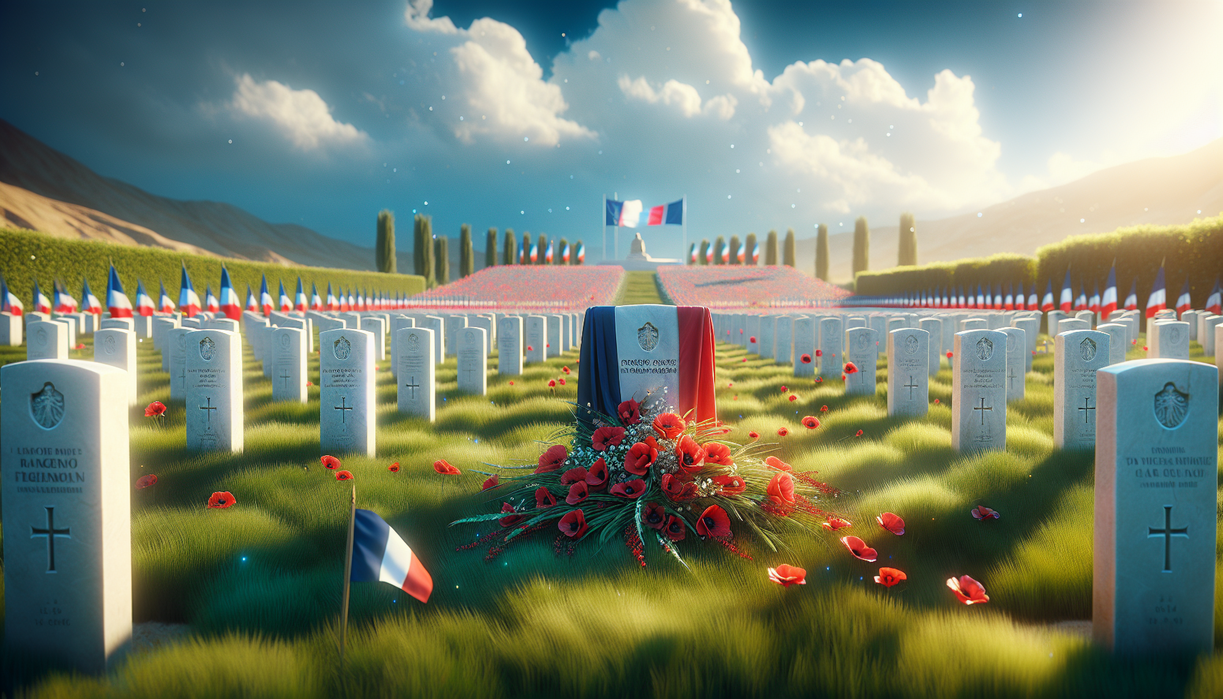
A top French official issued an unambiguous rebuttal, honoring soldiers killed on Afghan soil. He recalled specific operations, repeated visits by French presidents to Kabul, and funerals held in villages across France. This response pushed the story beyond fact‑checking. It became a moral argument about respect for allies. In international news coverage, images of French ceremonies for the fallen contrasted sharply with the dismissive tone of Trump’s remarks.
For French families who lost loved ones, the controversy is not a remote dispute about statistics. It reopens grief they carry daily. When international news flashes footage of flag‑draped coffins and hillside memorials, it underscores what is at risk when political leaders rewrite history. Their words do not fall onto empty air. They land on people who remember nights without sleep, doors opened to uniformed officers, and long, quiet burials.
NATO’s shared burden in Afghanistan
To understand why France reacted so strongly, one must revisit NATO’s record in Afghanistan. After the September 11 attacks, the alliance invoked Article 5 for the first time, treating the assault on the United States as an attack on all members. Over the next two decades, more than 50 NATO and partner countries deployed troops. International news outlets documented years of joint patrols, training missions, and dangerous operations in valleys and remote provinces.
French forces were hardly spectators. They fought pitched battles in regions such as Kapisa and Surobi, often under intense fire. Several deadly ambushes, including one in 2008, left deep scars on the French public. These episodes received extensive international news coverage at the time. Photographs from those missions show French infantry sharing trenches with American troops, not watching safely from behind.
Other European countries carried comparable risks. The United Kingdom, Canada, Germany, Italy, Poland, and many partners accumulated long casualty lists. Afghan operations blended air power, special forces raids, and grueling ground patrols. Each mission demanded coordination among allies. Suggesting that only U.S. troops faced combat ignores this collective narrative woven into two decades of international news reporting, operational reports, and veterans’ testimony.
Why international news battles over memory
This episode illustrates how international news plays referee when powerful figures alter the past. Claims from political leaders reach millions within minutes. Corrections, on the other hand, arrive later and spread more slowly. Journalists must compress complex conflicts into short segments and brief articles. That imbalance gives bold but inaccurate statements a head start. By the time detailed context appears, many people have already moved on.
Yet international news remains one of the few spaces where those who served can counter misleading stories. Reporters speak to veterans, commanders, diplomats, and families. They sift through archives, casualty lists, and mission logs. When French officials defended their troops, they did so not only for domestic audiences, but for a global public relying on international news to separate memory from myth. In that sense, media outlets act as a kind of civic armor for historical truth.
Still, news organizations face their own limits. Attention spans shrink, budgets tighten, conflicts stack atop each other. Afghanistan now competes with crises in Ukraine, the Middle East, and beyond. My view is that this makes precise coverage even more important. When conflicts fade from headlines, they become easier to distort. International news must resist that drift by returning, again and again, to documented facts, even when doing so feels repetitive.
A personal lens on sacrifice and rhetoric
From my perspective, the heart of this controversy is respect. Political leaders often speak casually about war, perhaps because they rarely bear its direct costs. Soldiers, by contrast, pay in years of service, physical scars, and sometimes their lives. When someone with a global platform dismisses allies as bystanders, he effectively discounts that price. International news outlets can challenge those narratives, but they cannot erase the sting felt by families and veterans. I believe societies owe a basic duty: argue fiercely about policy, but treat sacrifice as sacred. The French reaction to Trump’s remarks signals that this boundary still matters. It is a reminder that historical accuracy is not a luxury; it is a form of justice for those who can no longer speak.


