
 0
0
 0
0
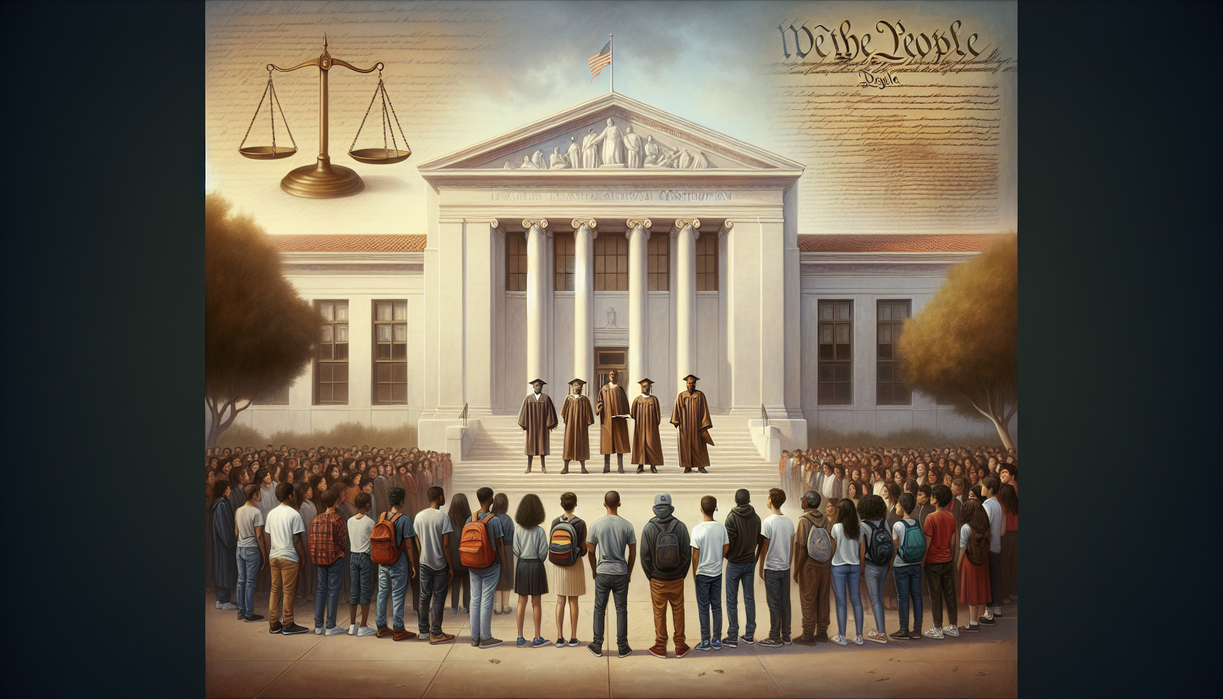
www.thediegoscopy.com – Education has always been more than test scores and report cards; it reflects power, opportunity, and whose children society decides to prioritize. A new clash over civil rights law now places American education at the center of an intense constitutional dispute, with Los Angeles schools emerging as a symbolic battleground. At issue is whether the promise of equal protection still supports desegregation efforts, or whether courts will reinterpret that promise in ways that weaken long‑standing safeguards for vulnerable students.
This fight reaches far beyond one city or one court case. It raises hard questions about what education justice should look like in a country still marked by deep racial and economic divides. As conservatives aim the 14th Amendment at school policies once designed to remedy segregation, the Department of Justice has stepped in, arguing that civil rights law still obligates governments to confront inequality rather than ignore it. The outcome could reshape how districts across the nation design education policies for a generation.
Education, Equal Protection, and a Shifting Legal Landscape
The 14th Amendment sits at the heart of this conflict, especially its Equal Protection Clause. Historically, courts used that clause to strike down blatantly racist policies and to support desegregation orders. Brown v. Board of Education stands as the clearest example. That landmark decision rejected the idea that separate schools could ever be equal in education. For decades afterward, federal judges supervised busing plans, attendance zones, and other tools aimed at dismantling state‑sponsored segregation.
Today, however, a new wave of conservative litigators seeks to flip the script. They argue that any attention to race in education policy, even for integration goals, violates equal protection. Under this theory, programs designed to diversify magnet schools or adjust admissions to reduce racial isolation become suspect. Their logic rests on a colorblind reading of the Constitution. They claim the government should never classify students by race, even when the purpose is to remedy old injustices still visible in school enrollment patterns.
The Department of Justice sees serious danger in that approach. From the DOJ’s perspective, ignoring race where discrimination persists simply cements inequality in education. Officials argue that civil rights law does not only forbid explicit racist acts. It also requires government institutions to avoid practices that predictably deepen racial disparities. If courts lock in a rigid colorblind rule, districts might lose vital tools to pursue equal education opportunity, leaving segregation to harden along residential and economic lines instead.
Los Angeles Schools as a Constitutional Test Case
Los Angeles offers a revealing snapshot of these tensions. The city’s education system reflects vast contrasts: elite magnet and charter programs, under‑resourced neighborhood schools, and complex patterns of racial separation that echo historic housing discrimination. In this environment, even small changes in admissions criteria or zoning can significantly reshape who gains access to high‑quality education. That reality makes LA fertile ground for lawsuits targeting integration strategies.
Conservative plaintiffs contend that some policies meant to broaden access actually violate the rights of specific groups. They argue that any race‑conscious design, whether for magnet admissions or specialized programs, unfairly disadvantages certain students. In their view, the Constitution protects individual students from any governmental use of race, regardless of past or ongoing discrimination in the education system. The framing treats each student as isolated from historical context, as if they all began on a perfectly level playing field.
The DOJ counters that such an approach drains the 14th Amendment of its practical meaning for education. Civil rights lawyers point to documented gaps in funding, staffing, advanced courses, and discipline rates that frequently align with race. They see Los Angeles not as a neutral market of school choices, but as a landscape shaped by decades of policy decisions. From this angle, targeted integration efforts appear less like special favors and more like overdue attempts to keep education from replicating broader social inequality.
When Civil Rights Law Is Used Against Desegregation
Perhaps the most striking feature of the current moment is how civil rights language becomes ammunition against desegregation. By invoking equal protection to challenge race‑aware education policies, conservative strategists seek to transform tools once used to dismantle segregation into weapons that freeze existing patterns in place. That strategy puts courts in a difficult position: uphold race‑neutral ideals in the abstract, or recognize that real‑world education systems remain unequal in ways colorblind rules cannot fix. My own view leans toward an honest reckoning with history and present‑day data. Equal protection should not be reduced to a slogan that ignores context. If education is to fulfill its role as a ladder of opportunity rather than a mirror of inherited privilege, legal standards must allow thoughtful, narrowly tailored efforts to integrate schools. Otherwise, we risk turning the promise of civil rights into a polished shield for the status quo, instead of a living commitment to fair, inclusive education for every child.


