
 0
0
 0
0
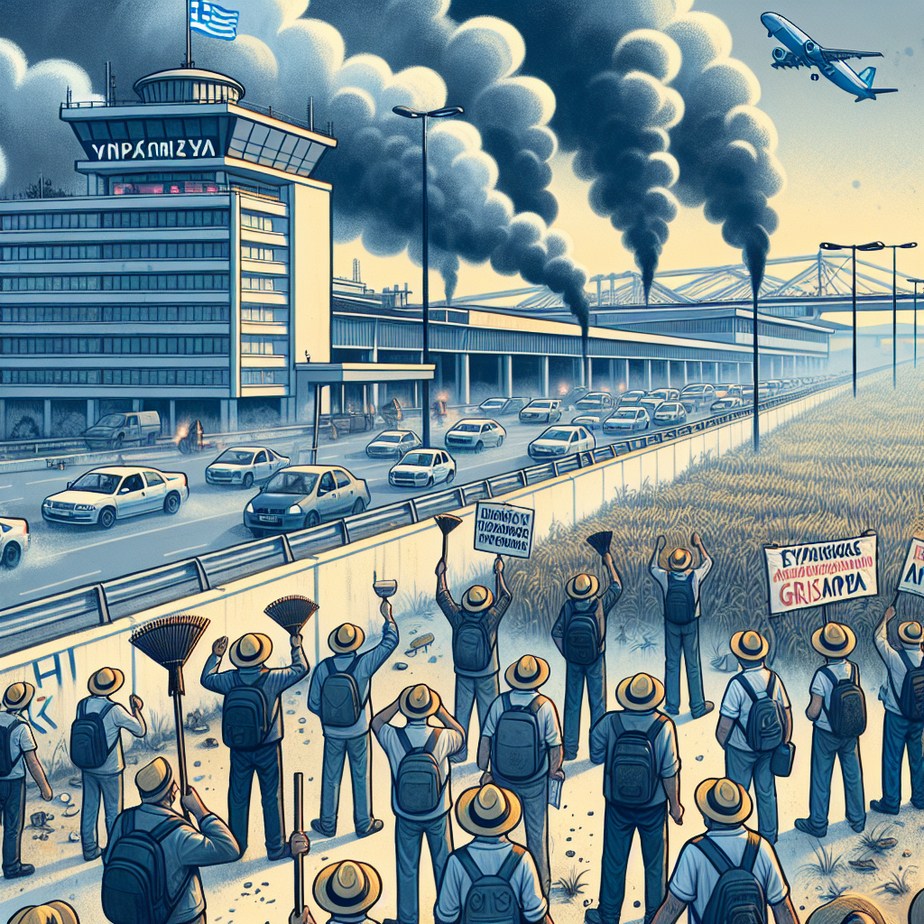
www.thediegoscopy.com – In Thessaloniki, Greece’s vibrant second-largest city, a new kind of fog has descended, not born of nature, but of frustration reaching its boiling point. The streets near the international airport witnessed an unusual sight on Friday as riot police and farmers faced off in a tense standoff. The farmers, armed not with traditional tools of agriculture but with a convoy of thousands of tractors, made their intentions clear—they’re fed up with delays in receiving much-needed EU subsidies.
Farmers from all corners have converged on crucial junctures, not just symbolic placeholders but vital points of access and transit, thus sending a message that resonates far beyond their own community. The decision to blockade the airport wasn’t a mere logistical inconvenience; it was a cry for visibility, an ultimatum delivered through machinery. The potent mix of desperation and determination created a combustible atmosphere that has now drawn a harsh police response, complete with tear gas.
This confrontation comes in the wake of mounting frustrations over bureaucratic inertia. Agricultural subsidies from the European Union, which play a critical role in sustaining farmers’ livelihoods, have been moving at a glacial pace—too slow for those who rely on them as financial lifelines. As a result, the farmers’ patience has plowed into the hard rock of governmental delays, sprouting protests as their only viable crop.
While the image of tractors lined up at border crossings may evoke scenes from a rural protest, the reality is far more layered. For these farmers, the issue isn’t just delayed payments but the broader struggle for fair treatment and recognition amid the sweeping tide of global agriculture policies. This standoff is a poignant reminder of the clash between local livelihoods and international economics.
As tractors rumble and tear gas canisters fall, the story unfolding in Thessaloniki is not just about a single protest. It is a chapter in a larger narrative about the tensions between local communities and expansive policy regimes. The farmers of Greece are not alone in their struggle; rather, they are front-line soldiers in a continuing global discourse on how to equitably support those who sustain our food systems.
Local Voices, Global Impact
Protests like the one in Thessaloniki may seem localized, confined to the sovereign borders of Greece, but their implications ripple outward. The EU’s agricultural policy frameworks, while intended to offer assistance, often face criticism for being too cumbersome, failing to meet the urgent needs of farmers facing economic and environmental challenges. Farmers worldwide watch these developments closely, finding solidarity in shared grievances.
Beyond the farm fields and busy urban intersections, such events draw attention to how disconnected policy-making can become when detached from the immediate realities some communities face. The current Greek farmers’ protest challenges policymakers to reevaluate the systemic inefficiencies that persist stubbornly despite digital advancements purported to streamline processes and ensure timely support.
Bringing it Back Home
For individuals outside of the agricultural sector, these events may seem removed from their daily lives. However, they touch core aspects of modern life, including food availability and prices, sustainable practices, and community stability. The chain reaction from protest to negotiation and resolution is not just an analogy for political maneuvering but a necessary mechanism to prompt overdue change.
The sight of tractors and tear gas is dramatic, but it’s also educational. It serves to illustrate the importance of being informed about the farmer’s role in society, about how they are indeed the bedrock on which economies and communities are built. The Thessaloniki standoff lays bare the urgent necessity for functioning systems that can keep pace with the lives dependent on them.
The unfolding event in Greece urges an introspective look at how and why these systems falter. It calls for a reimagining of policy so that it aligns more closely with those it aims to serve. In a world of rapid advancements, allowing for continued delays and disruptions isn’t just inefficient; it’s a disservice to those who provide our most essential commodities.
As tensions between the farmers and governmental authorities continue to unfold, the broader community hopes for a resolution that acknowledges the critical role they play in society. Their resolve, though borne of necessity, rings out as a call for systemic change, reminding us that the real investment in our futures lies not solely in economic figures but in the human lives they touch.


