
 0
0
 0
0
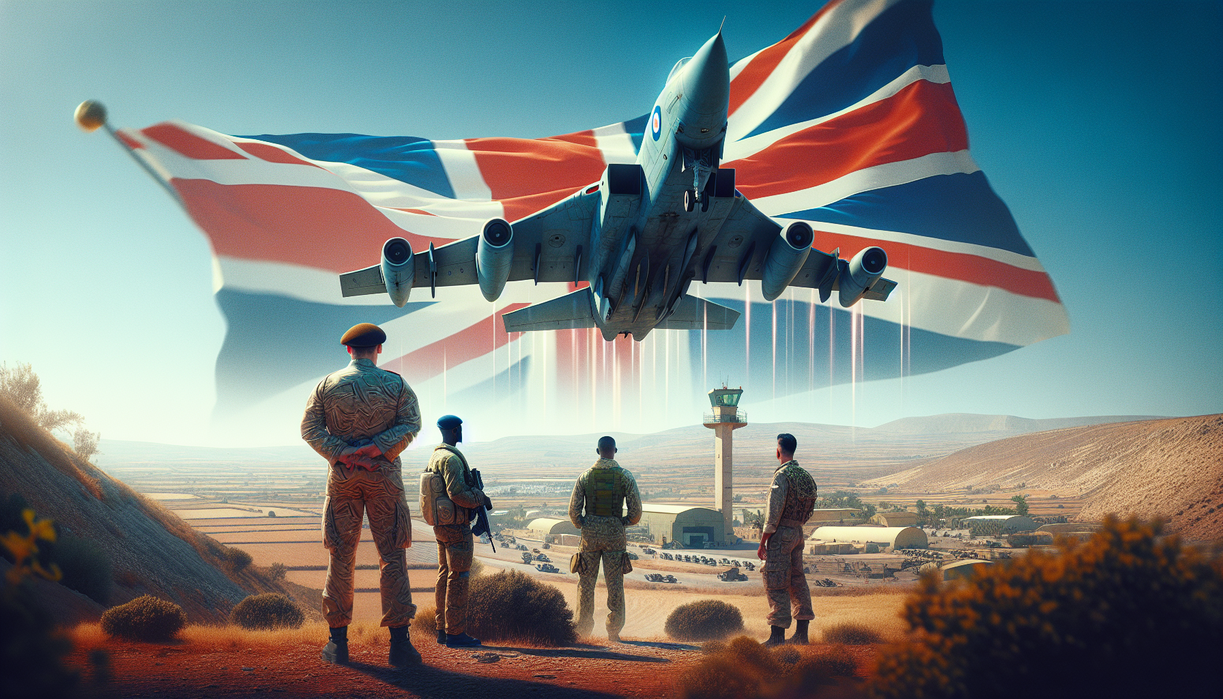
www.thediegoscopy.com – In the latest twist to international news, Britain insists it is not at war even after a drone struck its Akrotiri air base in Cyprus. The facility, a long-standing hub for Western military activity, has suddenly become a frontline symbol of rising friction involving Iran, the United States, and regional actors. This incident highlights how international news no longer unfolds only on distant battlefields, but also on critical support sites that underpin global security operations.
The UK government frames its role as supportive rather than belligerent, even while American forces reportedly use British bases to project power against Iranian-linked targets. That position raises uncomfortable questions for international news watchers. How far can a state assist combat missions before it crosses the line into active conflict? The Akrotiri strike forces Britain to confront that question in real time.
When “Not at War” Looks Like War
The drone strike on Akrotiri did not produce mass casualties, yet its symbolism reverberated through international news outlets. A base on European soil, associated with NATO partners and Middle Eastern operations, was targeted using Iranian-made technology. This was not a random act. It appeared carefully aimed at British infrastructure that supports U.S. military campaigns against groups with ties to Tehran. Even a limited attack can send a powerful strategic message.
London’s firm statement that it is “not at war” seeks to calm domestic audiences and avoid legal complications. Under international law, open acknowledgment of war can trigger treaty obligations, parliamentary scrutiny, and expectations of decisive escalation. By stressing a defensive posture, Britain tries to maintain freedom of maneuver. Still, that rhetorical shield sits uncomfortably alongside evidence that its territory enables offensive operations reported in international news.
From my perspective, the gap between official language and practical reality is becoming hard to ignore. When aircraft launch from a British base to support U.S. missions against Iranian-linked forces, the appearance of neutrality fades. International news coverage shows a pattern: Britain wants the influence that comes with strategic engagement, but not the public acceptance of being a co-combatant. This tension lies at the heart of today’s security debate.
Akrotiri, Iran, and the Chessboard of Power
RAF Akrotiri has long played a quiet but crucial part in international news, especially on Middle Eastern affairs. Situated in Cyprus, it offers rapid access to Syria, Iraq, and the Eastern Mediterranean. Over the past decade, jets and surveillance aircraft from this base supported missions against ISIS and monitored shifting regional coalitions. For many residents on the island, the base is both an economic lifeline and a constant reminder of nearby conflict.
The drone attack underscores how Iran’s reach has expanded across the region. Iranian-made drones, used by proxies and aligned militias, have appeared in conflicts from Yemen to Ukraine. International news analysts often describe them as the “poor man’s air force” because they are relatively cheap yet capable of precise strikes. Targeting Akrotiri sends a clear warning to Western governments: rear-area bases are no longer safe sanctuaries beyond retaliation.
On the global chessboard, this shift changes calculation for both London and Washington. If British sites can be hit in response to U.S. actions, the cost of hosting American operations rises. As an observer of international news, I see a broader pattern. Warfare is no longer neatly bounded by declared battlefronts. Instead, supply lines, communications hubs, and alliance infrastructure have become fair game. Akrotiri represents that vulnerability, bridging Europe and the Middle East in a way that now attracts hostile focus.
The Politics of Denial and Strategic Ambiguity
Britain’s repeated claim that it is not at war, despite an Iranian-made drone strike on its own base, reflects a wider trend in international news: strategic ambiguity. Governments seek the freedom to act militarily without triggering the political weight of a formal war declaration. As a commentator, I worry this blurs accountability and confuses citizens about risks they face. If a state’s facilities are attacked because they support combat operations, then public debate should confront that reality honestly. The Akrotiri case invites a reflective conclusion for all democracies: either embrace the responsibilities that come with military involvement, or scale back commitments. Denial may calm the headlines briefly, but it cannot alter the hard facts of modern conflict.


