
 0
0
 0
0
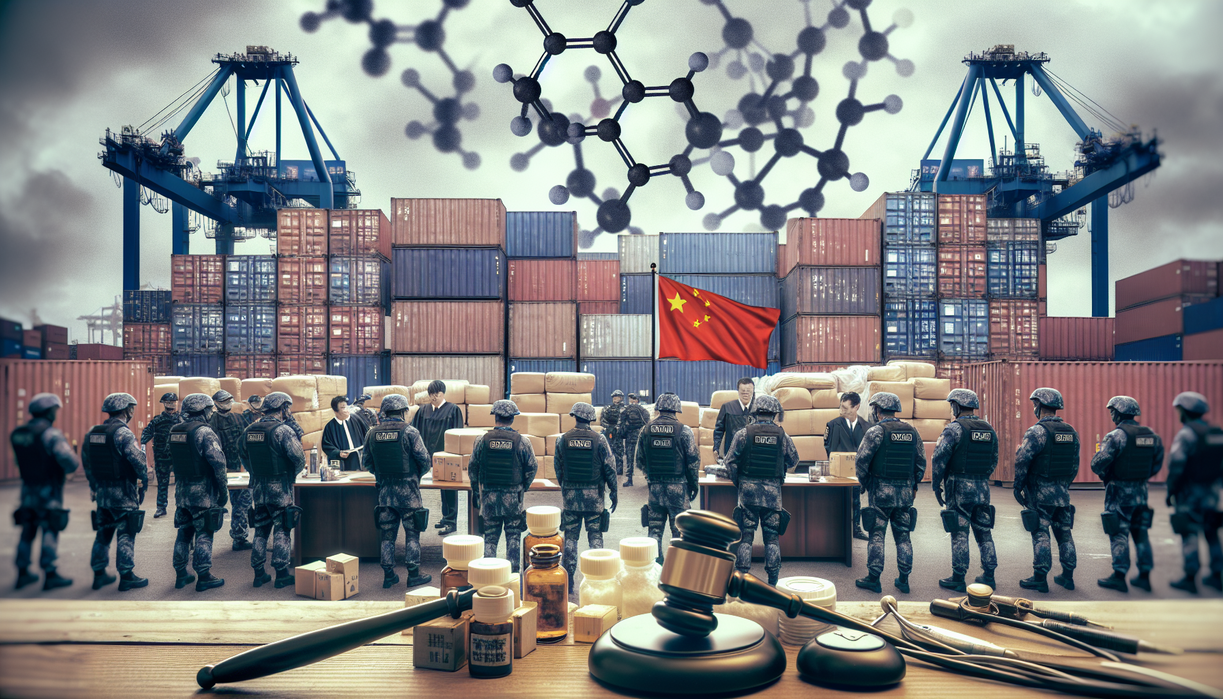
www.thediegoscopy.com – Health has moved to the center of global politics, and China’s latest fentanyl crackdown in Hubei province shows how public health concerns now shape diplomacy, trade, and security. Local authorities announced the arrest of seven suspects and the shutdown of multiple websites tied to precursor chemicals, echoing a wider effort to control the deadly synthetic opioid threat. While the operation happens inside China’s borders, its health impact stretches across the Pacific, where fentanyl-linked overdose deaths continue to rise in the United States.
This story goes far beyond crime statistics. It raises tough questions about how nations share responsibility for health crises that cross borders with ease, often hidden in encrypted chats, mislabeled shipments, and dark web marketplaces. Hubei’s actions aim to block the flow of raw materials used to make fentanyl, but the real issue is whether enforcement alone can protect public health in a globalized chemical supply chain. To understand this, we need to look at politics, economics, and human lives together, not as separate topics.
Health, Fentanyl, and Global Tensions
Health problems once stayed mostly inside hospitals, but fentanyl changed that. Synthetic opioids travel silently from lab to street, turning addiction into both a national tragedy and an international dispute. The arrests in Hubei highlight how chemical producers, brokers, and online sellers form a complex ecosystem. Even small batches of precursors can fuel massive quantities of finished fentanyl, with lethal consequences for communities thousands of miles away. Every interception represents not only a law enforcement success, but also a potential reduction in overdose deaths.
Washington has long argued that Chinese suppliers of fentanyl precursors play a central role in the U.S. overdose crisis. Beijing, in turn, points to American demand, weak domestic regulation of prescription opioids, and social inequality as key drivers. Health becomes a political weapon in this blame game. The Hubei crackdown arrives after years of friction, including U.S. tariffs linked partly to grievances over illicit drug flows. When public health emergencies become bargaining chips, cooperation grows harder, even though both sides share an interest in fewer funerals and fewer ruined families.
From a health perspective, the real victory would be sustained collaboration rather than episodic crackdowns. Shared databases, coordinated inspections, and transparent chemical tracking systems could give both countries better tools. However, mistrust often blocks this path. Each side fears exposing vulnerabilities or losing leverage. As a result, health outcomes remain uncertain, too dependent on short bursts of enforcement instead of stable joint strategies. The Hubei operation is meaningful, but it must be part of a larger, more durable framework.
Health Consequences Beyond the Headlines
The phrase “fentanyl precursor” can sound technical, almost abstract, but its health impact is painfully real. A precursor is simply a chemical building block; without it, dealers cannot manufacture the final drug. By arresting suspects and shutting websites, Hubei authorities try to disrupt this supply at an early stage. Each sealed lab or blocked portal may translate into fewer pills or powders on the street, fewer emergency room visits, and fewer grieving families. These links are indirect, yet very powerful in the big picture.
Still, enforcement alone rarely solves a health crisis. Markets adapt. Suppliers may move production to other provinces or countries, or switch to new chemical formulas that fall outside current regulations. We saw similar patterns during earlier drug waves, when one substance ban simply pushed users toward another. Real progress demands a trio of measures: stronger regulation, smarter surveillance, and comprehensive treatment for addiction. If policy focuses only on arrests, health outcomes will improve briefly, then stagnate or even worsen when traffickers adjust.
Communities on both sides of the Pacific bear the brunt of this instability. In many U.S. towns, overdose deaths have become a grim measure of local health. Families face trauma, children grow up with loss, and hospitals struggle under the mental and physical toll of the crisis. In China, smaller chemical firms may face sudden inspections, closures, or legal risk, creating economic uncertainty. When livelihoods clash with enforcement, some players might continue operating in the shadows. Bringing these actors into a clearly regulated, transparent system could protect both economic interests and public health.
Health, Responsibility, and a Shared Future
From my perspective, the Hubei fentanyl crackdown is a reminder that health security should rank alongside national security and economic security in global planning. Arrests and website shutdowns mark progress, yet they are only one piece of a much larger health puzzle. The world needs honest dialogue between governments, better oversight of the chemical trade, and stronger support for prevention and treatment. Otherwise, the same tragedy will simply migrate to new platforms, new shipping routes, and new communities. Reflecting on this case, we should ask not only whether enough people were arrested, but whether we are building a future where health, dignity, and cooperation matter more than short-term political advantage.


