
 0
0
 0
0
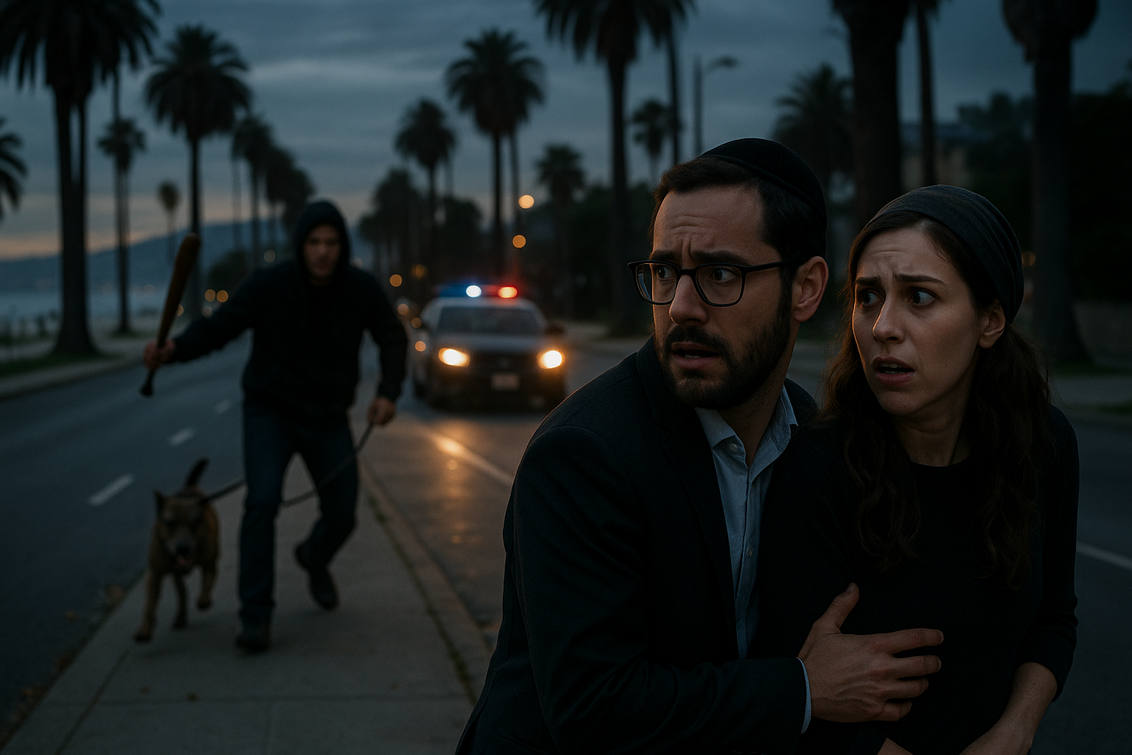
www.thediegoscopy.com – Antisemitism is no longer confined to toxic corners of the internet or historical documentaries. It is erupting on ordinary sidewalks, near coffee shops and apartment buildings where people expect basic safety. A recent incident in Santa Monica, where a man reportedly shouted genocidal slurs at a Jewish couple, chased them with a bat, then unleashed his dog, exposes how hate speech can turn into immediate, terrifying danger.
This episode of violent antisemitism forces a difficult question: how did we get here, again? Many assumed such open hatred belonged to a darker era. Yet a stranger can now weaponize a dog and a bat against two people targeted solely for being Jewish. This is not just one deranged individual; it is a symptom of a broader social disease.
When Antisemitism Turns Violent in Public
According to witness reports and local coverage, the Santa Monica attack unfolded in broad daylight, in a busy area where pedestrians, families, and workers routinely pass by. A Jewish couple became the focus of a man’s obsessive rage, triggered not by personal conflict but by their perceived identity. He allegedly screamed genocidal slogans that echo the worst chapters of Jewish history, then escalated from threats to action.
Witnesses described him grabbing a bat, chasing the couple across the street, and ordering his dog to attack. Even if the dog did not inflict serious injury, the intent was unmistakable. The couple had to run to save themselves, not from a random mugging but from targeted antisemitism wrapped in violent theatrics. That detail matters, because it shows hate ideology is not abstract; it shapes behavior.
Police eventually arrested the man on suspicion of assault and criminal threats. Authorities now face the task of determining whether hate crime charges apply. Many observers argue that antisemitism was not a side note, it was the central motive. The slurs, the bat, the unleashed dog, all form a single narrative: a person animated by hatred sought to terrorize Jews in plain sight.
Why This Incident Should Alarm Everyone
It is tempting to dismiss this attack as the work of a lone unstable individual, detached from any wider trend. That explanation feels comforting, yet it ignores the context. Antisemitism has surged across many countries, including the United States, with synagogues, Jewish schools, and visible Jewish individuals facing harassment, threats, and violence. Street-level aggression does not appear out of nowhere; it grows in an environment where dehumanizing rhetoric circulates unchecked.
Genocidal slogans targeting Jews have resurfaced in rallies, message boards, and even professional spaces. When people hear such language repeated enough, it can start to sound like a political position instead of a moral abomination. The Santa Monica attack illustrates how this normalization process works. A stranger did not merely insult a couple; he echoed genocidal language then acted as though their lives were expendable.
Everyone should feel alarmed, not solely Jewish communities. Antisemitism functions as an early warning sign of deeper societal decay. History shows that when a society tolerates open hatred of Jews, intolerance soon reaches other minorities, dissenters, and vulnerable groups. A culture that allows people to unleash animals and weapons on others because of ancestry is a culture eroding its own foundations.
Personal Reflections on Fear, Responsibility, and Action
From a personal perspective, what unsettles me most about this story is its ordinariness. The location is not a war zone or distant conflict; it is a familiar American city with beach views and tourist traffic. Antisemitism arriving in that environment reveals how thin the veneer of normalcy can be when hatred simmers beneath. I keep thinking about the couple who will now replay every step of that day whenever they walk outside. Incidents like this demand more than sympathy. They call for concrete steps: robust hate crime enforcement, bystander training, stronger community ties between Jewish organizations and neighbors, and more courageous public speech that refuses to treat antisemitism as just another opinion. If we wait until the next bat, the next unleashed dog, we accept fear as the price of being visibly Jewish.


