
 0
0
 0
0
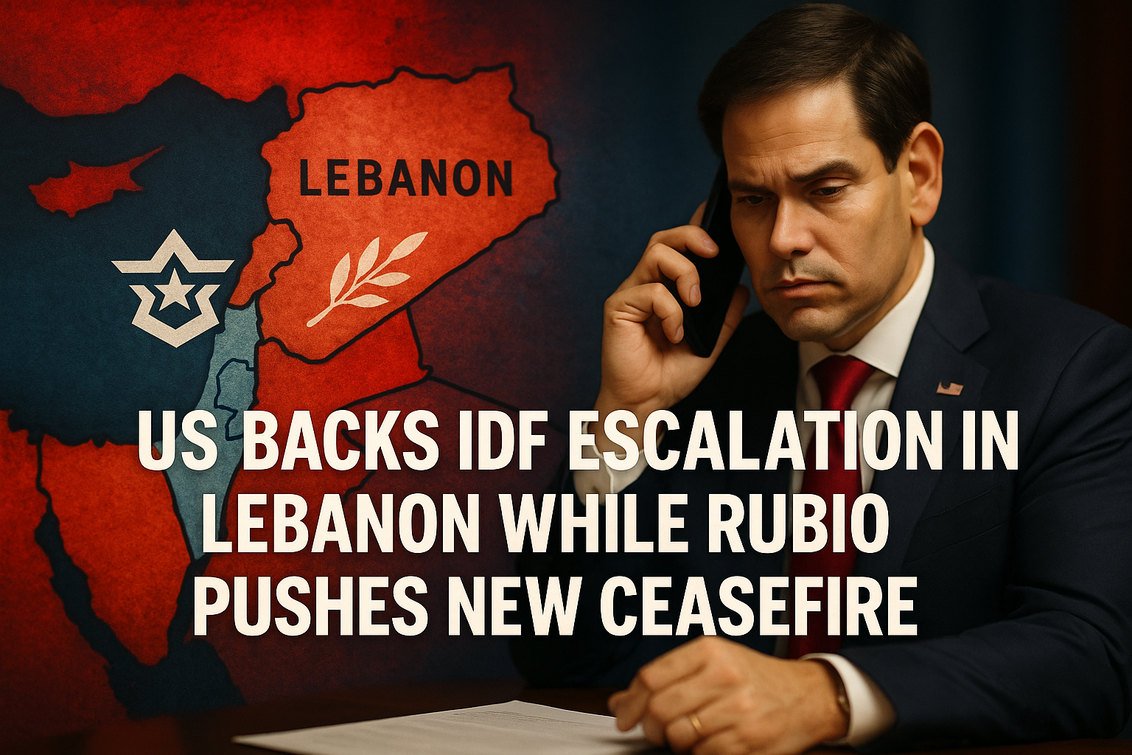
www.thediegoscopy.com – The fragile push for a Lebanon ceasefire has entered a dangerous new phase. Washington now publicly supports broader Israel Defense Forces (IDF) operations across Lebanon’s border, even as Secretary of State Marco Rubio presses both Israeli and Lebanese leaders to embrace a structured plan to halt the fighting. This uneasy mix of escalation and diplomacy puts the idea of a durable Lebanon ceasefire under intense pressure.
As artillery exchanges deepen, armed factions reposition, and civilians flee villages on both sides of the frontier, the contrast is stark. On one hand, military planners prepare for more expansive operations. On the other, diplomats scramble to outline a Lebanon ceasefire framework that could freeze the front lines before the situation spirals into a larger regional confrontation.
Washington’s Green Light and the Lebanon Ceasefire Dilemma
The US decision to back a broader IDF campaign across southern Lebanon raises complex questions about timing and intent. On the surface, officials insist this support aims to strengthen Israel’s deterrence posture before any Lebanon ceasefire is finalized. The logic is familiar: apply pressure on Hezbollah and allied groups, then negotiate from a position of perceived advantage. Yet history shows that wars often outgrow the plans of those who start them.
Critics argue that approving extended operations while promoting a Lebanon ceasefire sends conflicting signals. It encourages Israeli leaders to believe that more battlefield gains remain possible, while Lebanese factions may see little incentive to compromise under fire. In such a climate, mistakes are almost guaranteed, miscalculation becomes routine, and every cross-border strike risks widening the conflict beyond what Washington or Jerusalem intends.
From my perspective, this is a classic example of Washington trying to ride two horses at once. US policymakers want to reassure Israel that its security concerns are taken seriously, yet they also hope to prevent the conflict from expanding. The Lebanon ceasefire becomes both a goal and a bargaining chip, caught between genuine diplomatic ambition and the political imperative to appear unwaveringly loyal to an embattled ally.
Rubio’s Ceasefire Push: Strategy or Symbolism?
Against this backdrop, Marco Rubio’s active advocacy for a Lebanon ceasefire plan stands out. As Secretary of State, he has chosen to lean into diplomacy at a moment when domestic US politics often reward hardline rhetoric. His proposal reportedly centers on a staged reduction of hostilities, verified by international observers, paired with security guarantees for communities in northern Israel and southern Lebanon. The framework tries to address both immediate violence and the deeper fears that fuel it.
Supporters of Rubio’s push see an opportunity to lock in a Lebanon ceasefire before an incident triggers direct involvement from other regional actors. They argue that even an imperfect agreement could give space for humanitarian relief, reconstruction, and slow confidence-building between adversaries. To them, waiting for a perfectly crafted roadmap is a luxury civilians near the border do not have. Every additional day of shelling makes any future peace feel more remote.
Yet skeptics view Rubio’s effort as largely symbolic. They question whether he has enough leverage with Israel’s war cabinet or Hezbollah’s political leadership to shape their choices. Some also suspect that the Lebanon ceasefire rhetoric reflects US domestic considerations. By championing diplomacy, Rubio can reassure war-weary voters and international partners that Washington remains committed to de-escalation, even as it quietly endorses intensified IDF operations. The risk is that the promise of peace becomes a talking point rather than a genuine policy driver.
Regional Stakes: Why a Lebanon Ceasefire Matters Beyond the Border
The fate of a Lebanon ceasefire extends far beyond the villages perched along the Blue Line. Every rocket, drone strike, or air raid reverberates across a region already stretched by rivalries, proxy conflicts, and economic strain. Iran watches the situation closely, seeing both risks and openings. Gulf states worry about trade routes and investment flows if the confrontation spreads. Europe fears another refugee surge and energy market instability. In that wider context, the current US posture appears precarious. Supporting broader IDF action while blessing Rubio’s diplomatic outreach could either produce a carefully choreographed off-ramp or ignite a chain reaction nobody can fully control. Personally, I believe the next few weeks will reveal which path prevails. A credible Lebanon ceasefire, anchored in verifiable security arrangements and political realism, remains possible—but only if all sides accept that military dominance cannot substitute for long-term stability. The region has seen too many wars claimed as short, decisive campaigns that instead became open-ended burdens. If this lesson is ignored yet again, the people paying the heaviest price will not sit in cabinet rooms or foreign ministries; they will be families on both sides of the border who simply want a horizon that does not glow with fire.


