
 0
0
 0
0
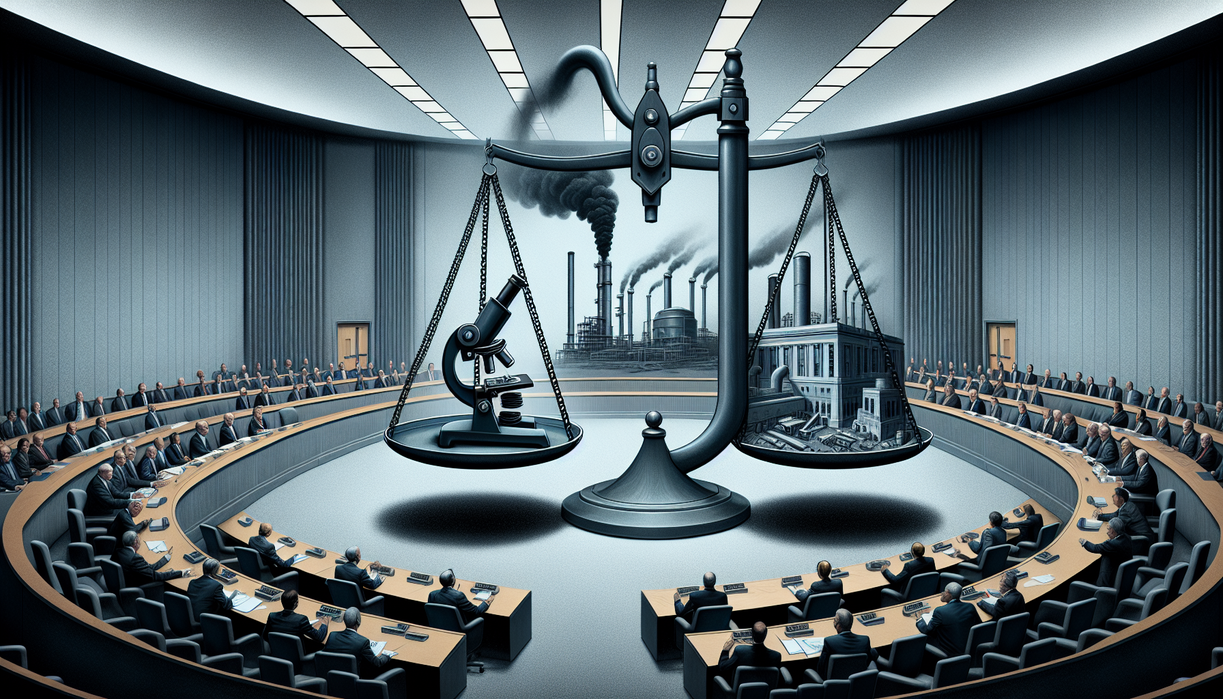
www.thediegoscopy.com – Context can change everything, especially when global climate rules are on the line. A new push from Republicans on the House Science Committee targets how the Environmental Protection Agency (EPA) measures and reports greenhouse gases. They argue that without richer context, raw numbers risk misleading both international partners and U.S. communities.
This might sound like a technical dispute, yet the stakes are broad. Measurement systems influence trade, innovation, and environmental credibility. When context is thin, regulations may become blunt tools instead of precise instruments. To understand where this argument leads, we need to unpack the science, the politics, and the potential consequences for future international standards.
Why Context Matters in Climate Data
Climate policy rests on data, but data without context can distort reality. Greenhouse gas inventories track emissions from factories, farms, vehicles, and power plants. They guide treaties, carbon markets, and corporate strategies. Republicans now contend the EPA leans too heavily on rigid metrics, while paying too little attention to uncertainty, regional variation, and technological progress.
Placed in proper context, a ton of emissions from one sector may differ significantly from a ton emitted elsewhere. Timeframes, local economic structures, and available technology all shift interpretation. If these nuances stay hidden, international greenhouse gas standards might punish some industries unfairly. They may also overlook realistic pathways to improvement.
From that perspective, the current dispute is not only about numbers. It is about narrative. Which story do the numbers tell once context shapes them? Republicans want the EPA to foreground corrective measures, peer review, and transparent error ranges. That demand reflects anxiety about how U.S. performance looks on the world stage when stripped of nuance.
Republican Concerns and EPA’s Role in Context
Members of the House Science Committee are pressing the EPA to revisit its approach to emissions measurement before global norms harden. Their letters emphasize context around methodology. They question whether some calculations ignore realistic margins of error or evolving science. If the agency misreads data, industries could face burdens that deliver little climate benefit.
Another concern centers on international negotiation leverage. If U.S. figures appear worse than those of trading partners because context was not properly framed, future deals might place American producers at a disadvantage. That risk grows as carbon border tariffs and supply chain disclosures expand. For Republicans, accurate context becomes a competitive necessity as much as a scientific one.
Critics of this stance counter that calls for more context can mask attempts to delay stricter rules. They suspect that highlighting uncertainty provides room for inaction. Yet science itself thrives on context, revisions, and open debate. The challenge is to demand robust context without allowing it to serve as a permanent excuse for paralysis.
Scientific Context Versus Political Strategy
Scientifically, context improves models, inventories, and projections. Politically, it can function as shield or sword. Republicans portray their push as a correction that aligns the EPA with state-of-the-art measurement practice. Environmental advocates worry that shifting emphasis to context diverts attention from the urgency of cutting emissions. The likely truth sits between: strong climate policy depends on both decisive action and careful interpretation. Without context, targets risk being either too lax or unrealistically strict. With context, compliance pathways become clearer, innovation gains focus, and international trust grows. The key test for the EPA will be whether revisions deepen scientific rigor while still driving meaningful climate progress, rather than weakening standards through endless reconsideration.


